Ensidigt fokus på upprustning är en björntjänst för säkerheten
Den snäva tolkningen av säkerhet på Folk och försvars rikskonferens gör Sverige och vår omvärld en björntjänst. Regeringens beslut att minska utvecklingsbiståndet och stödet till internationellt fredsbyggande arbete är både kortsiktigt och riskabelt för Sveriges långsiktiga säkerhetspolitiska intressen.
När Folk och Försvars rikskonferens hålls i Sälen kretsar diskussionerna kring militär upprustning som den främsta lösningen på säkerhetsutmaningar. Men säkerhetspolitik måste ses i ett bredare sammanhang. De ökade investeringarna i militär upprustning sker alltmer på bekostnad av Sveriges satsningar på internationellt utvecklingsbistånd. Sverige har drastiskt minskat finansiering till FN-organ som arbetar för fred och säkerhet samtidigt som nedskärningar på hemmaplan drabbar folkbildning och civilsamhällets viktiga granskande roll.
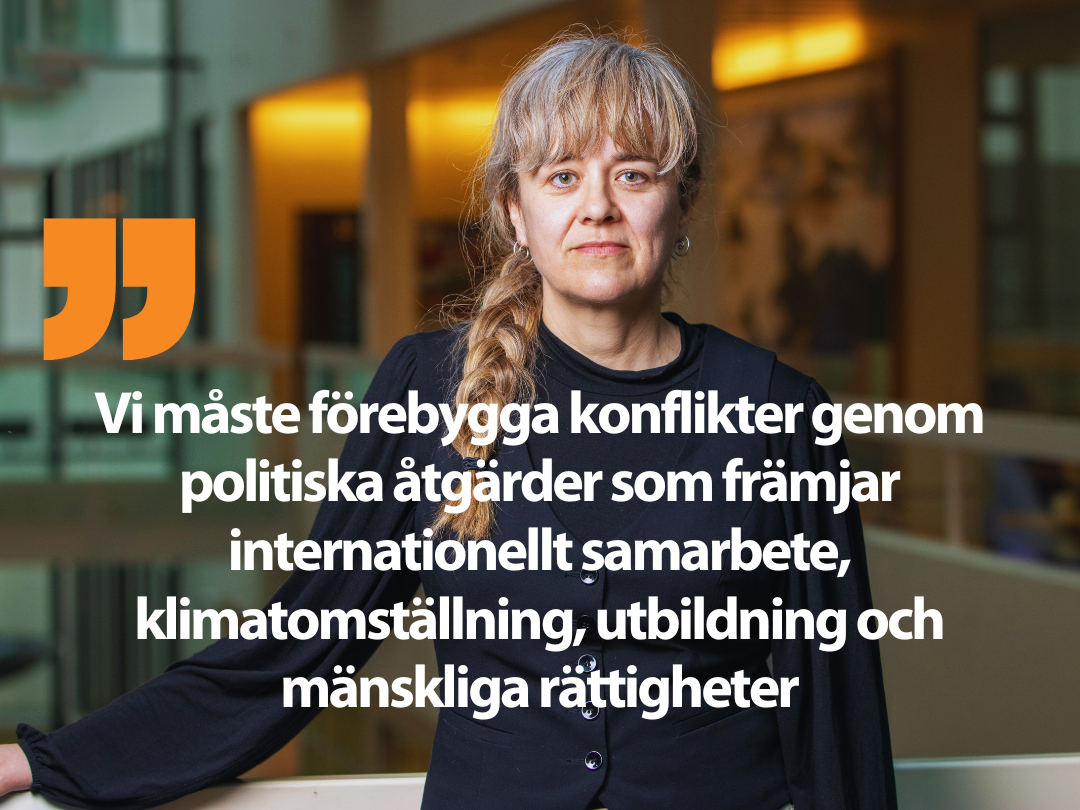
Kristna Fredsrörelsens generalsekreterare Lotta Sjöström Becker framhåller vikten av förebyggande åtgärder:
– Vi måste fokusera på att förebygga konflikter genom politiska åtgärder som främjar internationellt samarbete, klimatomställning, utbildning och mänskliga rättigheter, säger Lotta.
Utvecklingsbistånd är ingen lyx, utan en strategisk investering i vår framtida säkerhet
I en debattartikel i SvD den 11 januari av Carl Björkman och Ulrika Schenström framhålls utvecklingsbistånd som en strategisk investering i både nationell och global säkerhet. De argumenterar för att bistånd är en central del av Sveriges totala försvar genom att adressera grundorsaker till internationella konflikter och stärka demokratier och dess motståndskraft. De pekar på biståndets avgörande roll i Ukraina, där det parallellt med militärt stöd har hjälpt till att skydda civila och stärka demokratiska institutioner. Trots denna bevisade effektivitet väljer flera EU-länder, inklusive Sverige, att minska sitt bistånd, vilket skapar ett maktvakuum som Ryssland och Kina kan utnyttja.
Björkman och Schenström betonar att en långsiktig satsning på både försvar och bistånd är avgörande för att hantera globala utmaningar som extremism och hälsorisker. Att minska biståndet vore kortsiktigt och riskabelt för Sveriges säkerhetspolitiska intressen.
För att bygga en hållbar fred och stärka demokratin måste vi bredda vårt säkerhetspolitiska perspektiv. Mänsklig säkerhet måste ingå i den samlade analysen – inte bara militarisering och upprustning, som ger en alltför snäv bild av vad säkerhet innebär. Genom att adressera de grundläggande orsakerna till våld och konflikter, både här hemma och internationellt, kan vi skapa en mer långsiktig och effektiv säkerhet.
Det är dags att ge plats åt nya röster – för att den säkerhetspoliska analysen ska återspegla hela bilden av de prioriteringar som behövs. Annars riskerar vi att göra oss själva en björntjänst.